
Understanding Multi-Tenant SaaS Applications
A multi-tenant SaaS application is a cloud-based software platform designed to serve multiple customers from a single, shared infrastructure. Every customer, known as a tenant, accesses the same application, the same codebase, and the same backend services, yet their data remains completely isolated and secure. This allows SaaS companies to scale quickly, reduce infrastructure costs, streamline updates, and maintain efficiency without spinning up separate servers or deployments for each client.
In the SaaS world, multi-tenancy has become the preferred architecture for startup founders, product builders, and enterprise software teams. Platforms like Shopify, Slack, HubSpot, Salesforce, and Notion rely on multi-tenancy because it enables them to support millions of users across thousands of businesses without losing performance or maintainability. Instead of duplicating environments, they maintain a unified system that grows dynamically as their customer base expands.
Why Multi-Tenant Architecture Matters for SaaS Products

Multi-tenant SaaS architecture offers significant advantages over single-tenant systems. In single-tenant environments, each customer receives their own separate deployment, database, and infrastructure. While this approach provides high isolation, it is expensive, difficult to maintain, and slow to scale. Every update, feature rollout, or security patch must be implemented for each separate environment, which quickly becomes unsustainable.
Multi-tenant architecture solves these challenges by centralizing everything into one environment. Updates are released once and applied universally. Infrastructure is shared, so costs remain low even as tenants increase. Support becomes easier because all customers interact with the same version of the system. Onboarding becomes instant because new tenants can sign up without provisioning servers or performing complex setup. This architecture empowers SaaS companies to scale efficiently, reduce overhead, and deliver a consistent experience to every customer.
Comparing Single-Tenant and Multi-Tenant Approaches
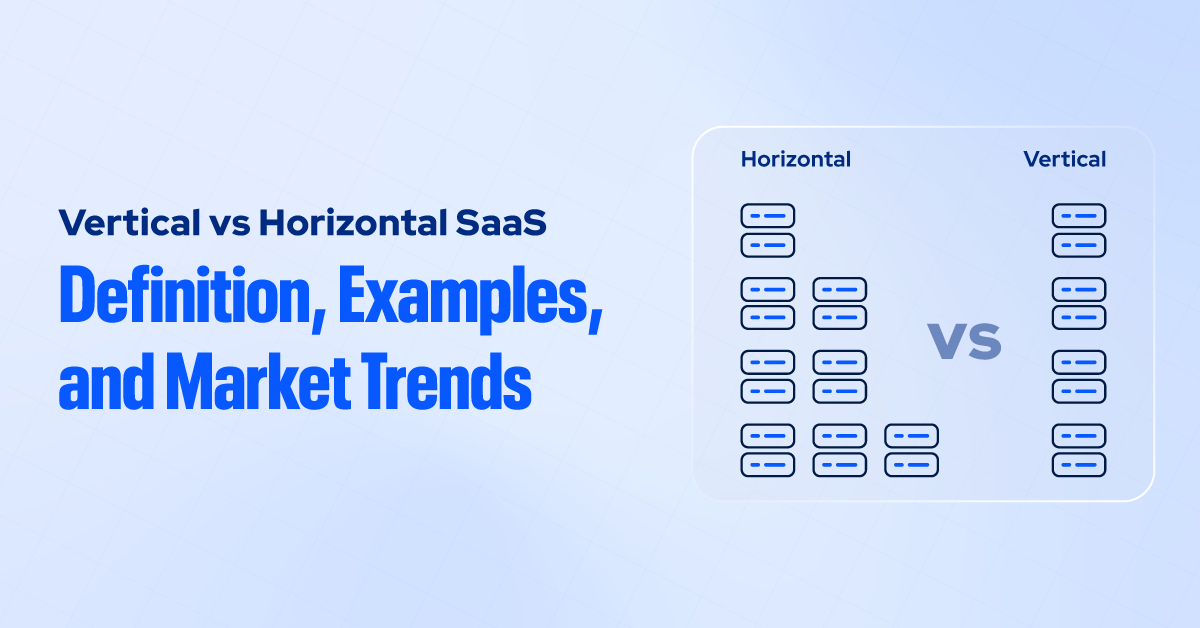
Choosing between single-tenant and multi-tenant architecture depends on the type of SaaS product being built and the audience it serves. Single-tenant systems are typically used for industries with strict compliance requirements such as healthcare, banking, defense, or government. These businesses require maximum isolation and are willing to pay for dedicated environments.
Multi-tenancy, on the other hand, is ideal for SaaS products targeting small businesses, mid-sized companies, agencies, education providers, and general enterprise tools. It offers affordability, flexibility, simplified maintenance, and higher scalability. Most modern SaaS products benefit massively from multi-tenancy because it allows them to serve many clients without duplicating infrastructure.
Different Types of Multi-Tenant Architectures
Multi-tenancy is not a single model. There are several architectural styles, each offering a different balance of performance, security, complexity, and isolation. Understanding these options helps you choose the right foundation for your SaaS product.
The most cost-efficient option is a shared database with a shared schema. All tenants share the same tables, and the system uses a tenant identifier column to separate data. This architecture is fast to build and affordable to operate, making it ideal for startups and small to mid-sized SaaS platforms. However, it requires strict row-level security and careful query design to prevent accidental data leakage.
A more isolated option is a shared database with separate schemas. Each tenant gets their own set of tables within one database. This provides stronger separation but is slightly more complex to manage and migrate. It is often used by SaaS platforms with moderate compliance requirements.
The highest level of isolation comes from using a separate database per tenant. This ensures that customer data is fully separated physically, but it also significantly increases operational complexity and cost. This approach is ideal for enterprise SaaS or regulated industries where strict data segregation is mandatory.
Core Building Blocks of Multi-Tenant SaaS Architecture
Every multi-tenant SaaS application relies on several fundamental components working together in harmony. These elements ensure security, performance, user experience, and long-term scalability.
A strong tenant onboarding system automatically provisions new accounts, creates their environment, applies initial settings, and registers billing. Tenant identification mechanisms help the system recognize which customer is making a request, whether through subdomains, custom domains, API keys, JWTs, or session data.
Authentication and authorization layers ensure that users can only access what their tenant allows. This includes role-based permissions, user groups, and fine-grained access controls. Data isolation must be enforced at every layer to prevent one tenant from viewing another tenant’s information, especially at the database level.
Subscription management, billing integration, audit logs, background jobs, monitoring, error tracking, and tenant-level configuration settings complete the foundation. Together, these elements form a reliable structure that supports thousands of customers through a single unified platform.
How Tenant Identification Works Inside the Application
Tenant identification is one of the most important aspects of multi-tenant architecture because it determines whose data should be accessed during every request. SaaS systems often use subdomain-based routing, such as tenantA.yourapp.com, which allows each tenant to have their own workspace address. Some products use custom domain mapping, enabling tenants to connect their own domain name for a white-labeled experience.
Other systems rely on tenant identifiers stored in authentication tokens or session data. API-first SaaS platforms often embed tenant identifiers into API keys or JWT claims. Enterprise systems may use tenant-specific login portals or SSO integrations. Whatever method is chosen, tenant identification must be reliable to ensure users are always routed to their correct data.
Best Practices for Designing the Database Layer
Database design is the heart of multi-tenant SaaS architecture. Whether using shared tables, separate schemas, or separate databases, the main objective is ensuring data isolation, performance, and security.
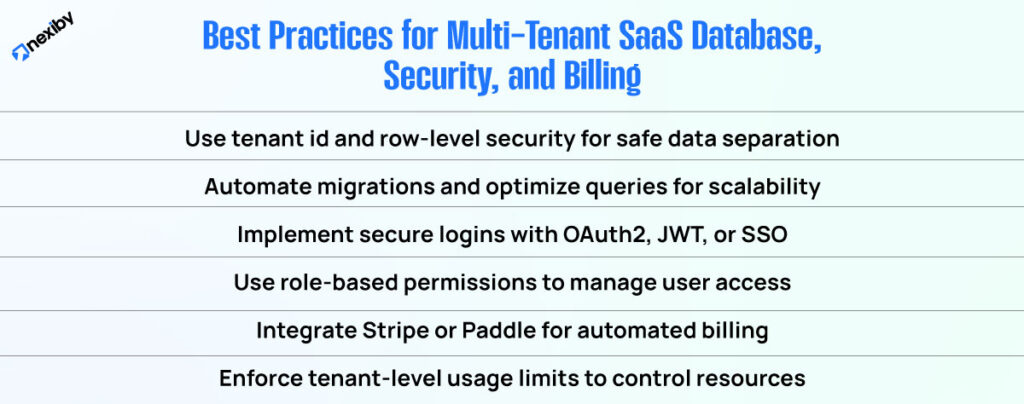
In shared-schema systems, a tenant_id column is used to separate records. Every query must filter based on tenant_id to prevent data cross-contamination. Strong indexing, row-level security policies, and strict ORM query practices are critical.
In separate-schema and separate-database architectures, isolation is naturally stronger, but migrations and updates become more complex. For every schema or database, structural changes must be applied consistently. This requires automated migration pipelines and strong DevOps processes.
Regardless of architecture, you must design your database with scalability in mind. Proper indexing, caching, sharding (if needed), and optimized queries will keep your SaaS responsive as your tenant count grows.
Authentication, Authorization, and Access Control
Multi-tenant apps require secure user authentication and precise access control. Authentication ensures that users are who they claim to be, while authorization determines what actions they are permitted to perform within the tenant’s environment.
Modern SaaS applications commonly use OAuth2, JWTs, SSO integrations, or session-based login depending on the use case. Authorization often includes roles such as Owner, Admin, Manager, Staff, or Viewer. Each tenant must have complete control over assigning roles and managing user access. Misconfigurations in this layer can lead to security vulnerabilities, so careful planning is essential.
Billing, Subscription Management, and Usage Limits
Subscription management is a critical part of any SaaS business model. Multi-tenant systems typically integrate with billing platforms such as Stripe Billing, Paddle, Braintree, or Chargebee. These tools handle subscription plans, trials, coupons, renewals, invoicing, taxes, and proration.
Usage limits also play a major role in multi-tenancy. SaaS platforms often restrict the number of users, projects, tasks, storage, API calls, or features based on the subscription plan. These restrictions must be enforced at the tenant level, ensuring fairness and preventing resource abuse.
Importance of Caching in Multi-Tenant Systems
Caching plays a major role in improving the speed and responsiveness of multi-tenant SaaS apps. Because multiple tenants access the same resources, efficient caching prevents your system from reprocessing identical queries repeatedly. Technologies like Redis, Memcached, edge caching, and CDN caching can dramatically reduce server load.
To ensure tenant safety, cache keys must be tenant-aware. For example, caching a list of users should include the tenant identifier in the cache key. This prevents accidental exposure of cached data across customers.
Scaling Multi-Tenant SaaS Applications
Every growing SaaS eventually needs to scale. With more tenants comes more data, more requests, and more load on the system. Multi-tenant architecture gives you the flexibility to scale both vertically and horizontally.
Vertical scaling (upgrading server resources) is easy but limited. Horizontal scaling (adding more servers, load balancers, replicas, and distributed queues) offers long-term growth. Databases may require sharding or partitioning as the dataset grows. API services may be separated into microservices to improve performance and reliability. Background workers and queue systems help offload heavy tasks such as email processing, file conversions, and report generation.
Scaling should be planned early, even if the product is still small, so that your architecture supports long-term growth without requiring a full rebuild.
Security Considerations in Multi-Tenant Architecture
Security is a top priority in any multi-tenant SaaS because multiple customers share the same system. A single vulnerability can compromise many tenants, making security a non-negotiable part of your architecture.
Best practices include encrypting data at rest and in transit, implementing row-level security policies, validating all inputs, enforcing strict access controls, logging activity for auditing, and monitoring for suspicious behavior. Rate limiting helps prevent abuse, while strong password policies protect user accounts. Secrets, tokens, and credentials should be stored securely using vaults or key management systems.
A secure multi-tenant environment builds user trust and protects your reputation.
Backup, Restore, and Disaster Recovery
A reliable backup strategy is essential for protecting tenant data. Multi-tenant backups should support full system backups as well as tenant-level backups. In the event of an incident, you may need to restore the entire platform or restore data for a single tenant without affecting others.
Disaster recovery plans often include multi-region replication, failover clusters, automated restoration processes, and regular recovery testing. High-availability designs ensure your SaaS continues operating even during server failures or unexpected outages.
Monitoring, Logging, and Observability
Once your multi-tenant SaaS goes live, visibility into performance becomes essential. Monitoring tools track uptime, error rates, response times, tenant-level activity, slow database queries, and resource utilization. Logging tools record user actions, API failures, and system warnings. Observability tools help identify patterns and diagnose issues.
By monitoring your system continually, you can identify bottlenecks early, improve user experience, and maintain long-term performance.
White-Labeling and Customization in Multi-Tenant SaaS
Many SaaS products offer customizable branding options for tenants. This includes custom domains, logos, color themes, email templates, invoice styles, and dashboard branding. White-labeling is especially valuable for agencies, resellers, and businesses that need a personalized environment for their team or clients.
These customization features must be designed without compromising security or the shared nature of the architecture.
Final Thoughts on Building a Multi-Tenant SaaS Application
Building a multi-tenant SaaS application requires thoughtful planning, strong architecture, and a deep understanding of tenant isolation, security, and scalability. With the right approach, you can build a SaaS system capable of serving thousands of customers from a single unified platform while maintaining performance, reducing costs, and delivering a seamless user experience.
Multi-tenancy is more than a technical choice; it is a strategic business decision that shapes how your SaaS grows, scales, and evolves. By focusing on performance, security, tenant onboarding, billing, monitoring, and data isolation, you can create a SaaS product that stands strong in the competitive cloud landscape.
FAQs
What is a multi-tenant SaaS app?
– A multi-tenant SaaS app is a single software system that serves many customers while keeping each tenant’s data separate. All users share the same application and infrastructure, making the platform easier to scale and maintain.
Is multi-tenancy good for SaaS?
– Yes, multi-tenancy is ideal for most SaaS products. It lowers hosting costs, simplifies updates, improves scalability, and makes onboarding new customers faster and more efficient.
How to build a SaaS based application?
– To build a SaaS app, define core features, choose a scalable architecture, design a simple UI, build secure user authentication, set up tenant isolation, integrate billing, and deploy on cloud hosting. After launch, test, monitor, and improve continuously.
What is the difference between single-tenant and multi-tenant SaaS?
– Single-tenant SaaS gives each customer their own separate environment, while multi-tenant SaaS lets many customers share one application with secure data separation. Multi-tenancy is cheaper, easier to scale, and simpler to maintain.
Why do SaaS companies prefer multi-tenant architecture?
– SaaS companies prefer multi-tenancy because it reduces infrastructure costs, speeds up updates, supports rapid growth, and allows all customers to use the same core system without managing separate deployments.